Richarlison scored a bicycle kick goal against Serbia.
Brazil lived up to supporters’ expectations. Tite’s team were considered favourites for the World Cup title by many people and they proved it in their debut in Qatar. Against a Serbia side that defended well throughout the match, Richarlison’s goals were enough to give the ‘Selecao’ all three points.
Brazil means Jogo Bonito. Tite’s side proved to have one of the best attacks of the World Cup, as despite facing a Serbia side that defended incredibly well, the ‘Selecao’ managed to take all three points in a game that could have ended in a goal fest. Despite Casemiro hitting the post twice, Richarlison made the most of his two chances to sink Serbia’s hopes and score one of the best goals of the World Cup so far.
Dani Olmo opened the scoring gate against Costa Rica
Luis Enrique’s Spain side sailed to an easy victory over a feeble and out-of-place Costa Rica team. This victory leaves ‘La Roja’ top of Group E on goal difference after improving upon Japan’s earlier result.
Spain dominated in the first half which saw them cruise to a deserved three goal lead. Dani Olmo opened his and Spain’s account for this World Cup after a wonderful move, leaving him the easy job of slotting it past Navas.
Asensio was next to add to the tally, as he calmly slotted home off a Jordi Alba cross. Alba then aided for the third, as he was fouled in the penalty area, leaving Ferran Torres the simplest of tasks of converting the spot-kick.
The second half brought much of the same, with the Europeans dominating start to finish. There were three more goals to be had in the half, with Torres adding to his collection, and then Gavi getting Spain’s deserved fifth. Soler then added the sixth after some sloppy keeping from Navas, before Morata deservedly getting on the score-sheet.
This win leaves Spain top of Group E, level with Japan on points, but ahead on goal difference. They await Germany in their next game which promises to be a mouth-watering tie, with the Germans desperately needing a win. Costa Rica find themselves bottom, with Japan to play next.
A daily cup of tea could help you to enjoy better health late in life — however if you’re not a tea drinker, there are other things you can add to your diet.
The key is flavonoids, naturally occurring substances found in many common foods and drinks such as black and green tea, apples, nuts, citrus fruits, berries and more.
They have long been known to have many health benefits, but a new study from Edith Cowan University (ECU) suggests they may even be better than previously thought.
There are many dietary sources of flavonoids, some with very high levels, said Ben Parmenter, researcher and principal investigator at ECU’s Nutrition and Health Innovation Research Institute.
“In most populations, a small group of foods and beverages — uniquely high in flavonoids — contribute the bulk of total dietary flavonoid intake,” he said.
“The main contributors are usually black or green tea, blueberries, strawberries, oranges, red wine, apples, raisins/grapes and dark chocolate.”
There are various types of flavonoids, such as flavan-3-ols and B. flavonols, which the study indicated appear to also associate with abdominal aortic calcification (AAC).
Study participants with higher total intakes of flavonoids, flavan-3-ols, and flavonols were 36-39% less likely to have extensive AAC.
Black tea was the main source of all flavonoids in the study group and was significantly less likely to contain extensive AAC.
Compared to respondents who didn’t drink tea, participants who drank 2 to 6 cups a day were 16 to 42% less likely to get advanced AAC.
However, some other food sources with flavonoids, such as fruit juice, red wine, and chocolate, did not show a significant positive association with AAC.
While black tea was the main source of flavonoids in the study (possibly due to the age of the participants), Mr. Parmenter said people could reap the benefits of flavonoids without turning off the kettle.
“Out of the women who don’t drink black tea, higher total non-tea flavonoid intake also appears to protect against extensive calcification of the arteries,” he said.
“This implies flavonoids from sources other than black tea may be protective against AAC when tea is not consumed.”
Mr. Parmenter said this was important because non-tea drinkers can benefit from flavonoids in their diet.
“In other populations or groups of people, such as young men or people from other countries, black tea might not be the main source of flavonoids,” he said.
“AAC is a major predictor of vascular disease events, and this study shows intake of flavonoids, that could protect against AAC, are easily achievable in most people’s diets.”
Published in Arteriosclerosis, Thrombosis, and Vascular Biology: “Higher usual dietary intake of flavonoids is associated with less extensive abdominal aortic calcification in a cohort of older women.”
Morocco faced Croatia in Group F and the result was 0-0 in a game that had limited chances. In the next few matches, Germany will play Japan in Group E, Luis Enrique’s Spain will host Costa Rica in the same group, and Belgium will play Canada in Group F. Canada will also be preparing to face Belgium in the first match of the World Cup, where Alphonso Davies will start after recovering from injury, as well as Steven Eustaquio and Milan Borjan.
Neurological and psychiatric disorders are one of the worrisome consequences of COVID-19, according to a new study.
Oxford University researchers reported last year that one in three patients developed a mood disorder, stroke or dementia six months after contracting the coronavirus.
Now researchers have published a new long-term analysis of 1.25 million Covid patient datasets. Known as the largest of its kind, the study also included data on children and several new variants.
According to the University of Oxford and the National Institute for Health and Care Research, the risk of developing neurological and psychiatric disorders such as psychosis, dementia, brain fog and seizures remains high compared to other respiratory infections up to two years after infection. A report from the Oxford Medical Center for Biomedical Research, published Wednesday in the Lancet Psychiatry, says.
Anxiety and depression are more likely to occur immediately after a diagnosis of COVID-19 but tend to resolve within the first two months, as after a flu-like infection.
The research has shown that data on children show that children are less likely to be diagnosed with anxiety or depression by the age of two, and the risk of brain fog disappears.
However, the risk of developing seizures and psychotic disorders is significantly higher than in children who have had other respiratory infections.
Viewing how the different variants affected health risks, the probability of neuropsychiatric diagnoses increased, from 10% higher for anxiety to 38% for brain fog, if one was infected with the Delta variant as compared to the alpha version. Similar results were discovered for the Omicron variant, even though it is relatively milder.
Dr Max Taquet, who conducted the analysis at Oxford University, said:, “The findings shed new light on the longer-term mental and brain health consequences for people following COVID-19 infection. The results have implications for patients and health services and highlight the need for more research to understand why this happens after COVID-19, and what can be done to prevent these disorders from occurring, or treat them when they do.”
The study shows that adults under the age of 65 with a history of COVID-19 infection for up to two years suffer from brain fog (640 versus 550 cases per 10,000) and muscle disorders (44 versus 32). cases per 10,000 population). Over the same period, adults aged 65 years and older with COVID-19 were more likely to be diagnosed with brain fog (1540 vs 1230 per 10,000). Dementia (450 vs 330 per 10,000) and psychotic disorders (85 vs 60 per 10,000). Children with Covid were more likely to have seizures (260 versus 130 per 10,000 children) and psychotic disorders (18 versus 6 per 10,000 children).
Regarding study limitations, the researchers caution that these studies may be underrepresented in self-diagnosed and asymptomatic cases, as they are not usually included. It also does not address the severity or duration of illness after COVID-19.
A Saudi Arabian woman studying at the University of Leeds in England has been sentenced to 34 years in prison for using Twitter and retweeting dissident tweets.
Salma al-Shehab, 34, a doctoral student, was charged with “public disorder” and “obstruction of civil and national security.” Salma was originally sentenced to three years in prison, but the sentence was extended to 34 years, including a 34-year travel ban.
The woman returned to Saudi Arabia for a holiday and is awaiting sentencing by the Special Terrorism Tribunal. She is known as a dental hygienist and doctoral student at the University of Leeds. He also teaches at Putri Noor bint Abdulrahman University. Salma is married and has two sons.
Her case got a lot of attention on Twitter as people demanded her release.
University of Leeds student Salma al-Shehab has been sentenced to 34 years in prison for retweeting dissidents on Twitter.
This sentence from the Saudi Dictator’s terrorist court, for criticizing MBS’ reign of terror (driven by blood & oil) IS, ITSELF, terrorism! https://t.co/FGepNQjWmJ
– Rula Jebreal (@rulajebreal)
#Human rights activists noted the freedom of women’s rights activist Salma Al-Shehab, who was sentenced by a Saudi Arabian court to 34 years in prison. This is the longest sibling in FreeSalma history.#الحرية_لسلمي الشهاب #.Kingdom
– Abd Alsalaam (@AbdAlsalaam17) August 15, 2022
this is abhorrent – and Salma al-Shehab is a UK resident, she’s studying a PhD in Leeds, the UK should be speaking up for her, as someone who chose to come here.
The situation arose just days after US President Joe Biden met with Saudi Crown Prince Mohammed bin Salman. Saudi Arabia’s sovereign wealth fund, the Public Investment Fund (PIF), is reported to control a significant portion of Twitter.
A US court last week, found a former Twitter employee guilty of spying on Saudi Arabian officials. Ahmad Abouammo allegedly sold information about Twitter users for money.
Abouammo is alleged to have provided information to publications critical of the Saudi regime. He left Twitter in 2015. The jury found Abouammo guilty on six counts.
According to reports, Salma al-Shehab may appeal her sentence. Her Twitter account is said to have only 2,597 followers.
The South African billionaire admits he was a fan of the Red Devils as a child.
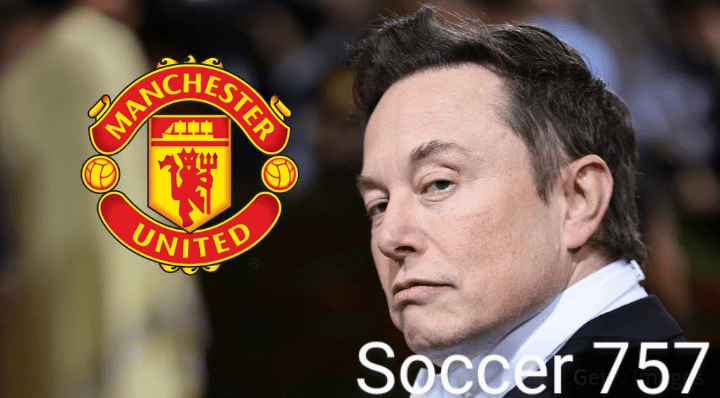
SpaceX founder and CEO Elon Musk has told his social media followers that he wants to buy Manchester United. United fans’ dissatisfaction with Glazer ownership has recently reached new heights, and the Red Devils are facing another disappointing transfer period.
They are no closer to signing long-term goal Frankie de Jong and are also linked with Marko Arnautovic and Adrien Rabiot. Both deals are not very popular with fans.
Manchester United failed on the pitch in their first two Premier League matches, losing 2-1 to Brighton and 4-0 to Brentford.
What did Elon Musk say about the United acquisition?
Musk thrilled Manchester United fans with a spectacular tweet on Wednesday.
After providing yet another update on his political affiliation, the Tesla CEO tweeted: “Also, I’m buying Manchester United ur welcome.””
When asked if he was serious, Musk took the stand.
He added: “No, this is a long-running joke on Twitter. I’m not buying any sports team. Although, if it were a team, it would be Man U. They were my fav team as a kid!”
Although, if it were any team, it would be Man U. They were my fav team as a kid.
Although, if it were any team, it would be Man U. They were my fav team as a kid.
Other person who could buy United from the GGlazer
Musk isn’t the only one involved in the recent acquisition. Michael Knighton, who first bought the club for £10 million in 1989, was also mentioned as a potential buyer.
Earlier this month, Knighton said he was planning a “hostile takeover” of Old Trafford.
“We have an inept and frankly useless ownership who know little about this game of football. Everyone knows that we need new ownership of this football club and that is my aim and those are my objectives,” he stated.
“I am making good progress, continuing to talk to the people, I have got some good pledges and good finance. We are now working on the offer document. Remember, it is a hostile bid – that simply means that the club isn’t officially for sale.”
Current state of Kofi Adomah after surviving the assasination attack.
One of Ghana’s most loved media personalities, Kofi Adomah Nwanwanii has survived an assasination on Saturday, August 7, on the way home from field trip to DAMAX Eastate in Kuntunse for a home project.
Anonymous source close to the media personality recounted that unidentified men on a motorcycle obstructed his car and attacked him near Old Ashongman.
The attackers wounded him with a sharp object when finally approached him, and aimed at his face to slander him.
Upon realizing their plan , Kofi tried to prevent them from hurting his face with his left hand, and ended up with cuts and bruises on his hands.
The men per source then doused the reporter with an inflammable substance, presumably petrol with the aim of setting him afire.
Kofi Adom Nwanwanile is currently undergoing treatment at the hospital.
zoonotic diseases are now transmitted from person to person. However, the search for habitat for new species of wild animals can create a constant danger for them.
Two months after the start of the international monkeypox epidemic, more than 18,000 cases had been reported worldwide.
In 2003, the virus spread through exotic pets imported from Ghana, infecting 72 people, including 3-year-old children. 19 people were hospitalized before the outbreak was curbed.
Looking back, the blatant lesson appears to be the rate at which monkeypox has changed its behavior since then.
By 2003, every case could be traced back to human contact with an infected animal. In 2022, transmission seems predominantly person-to-person. This can be traced back to sexual contact or skin-to-skin contact between men who have had sex with another.
However, one important detail from the 2003 eruption is worrying researchers studying this new eruption.
Twenty years ago, the virus spread from African wild animals to American animals sold as pets.
No one has considered such cross-species susceptibility, as no human infection with monkeypox has previously been identified outside of West and Central Africa.
African wild animals at the time, were known to transmit disease to those who hunted or inhabited their territories.
Surprisingly, the virus can spread to wild animals on other continents. It remains a tale of warning and could serve as a warning that the virus could gain a foothold in new animal populations after it has spread to nearly 80 countries.
However, it is highly troubling that virologists are talking about a new range of possible new host species that could pose a “risk of retransmission” from humans to animals, creating new exposure risks beyond what is currently known.
Scientists are studying this closely. “At this point, I don’t think there are clearly any zoonotic cases,” said a virologist and professor at the International Vaccine Center at the University of Saskatchewan, Angela Rasmussen.
“And I do think that that would be distinct, because we would see cases popping up with no connection to an MSM sexual network, and that has not happened yet.”
Several species of rodents have been found to carry monkeypox in the country where they were first identified, so some species are susceptible to monkeypox in other countries. However, the accumulated knowledge is not enough to reveal its meaning.
“What I take from the 2003 experience is that there is a diverse range of species that are likely susceptible to monkeypox, But we do not yet fully understand what that looks like.” says a microbiologist and assistant professor at the University of Manitoba Jason Kindrachuk, who studies monkeypox and other zoonotic pathogens.
History of monkeypox
Monkeypox got its name because monkeys collected from zoos or laboratory animals were its victims when the disease was first identified,
although it circulates among various species of rodents and primates.
It was first detected in monkeys transported from Singapore to the Polio Research Center in Copenhagen in 1958, then transferred to a laboratory at the University of Pennsylvania in 1960 and to the Walter Reed Laboratory of the US Army in 1962.
Two years later, it made many monkeys, orangutans, chimpanzees and gorillas sick. Gibbons and many other species that live in the Rotterdam Zoo. The outbreak was an early warning that monkeypox could spread in a complicated way, as primates have not arrived at infected zoos.
The virus was transmitted to them through new acquisitions: Two giant South African pangolins sold to zoos by wildlife traders. It was later suggested that the pangolins were hiding somewhere along the chain of custody in a nursery with already infected animals, similar to the crossbreeding that led to the 2003 U.S. outbreak.
This may be why laboratory monkeys were also infected during the first outbreak.
According to old medical journals, there was a huge trade in primates around the world in the 1960s, which was an unfortunate side effect of the drive to develop and test the first polio vaccine.
“Conditions for shipping and handling were deplorable all kinds of animals from different places being crowded together,’’ a prominent virologist wrote in the 1990s.
It took years for public health professionals to realize that monkeypox originated in Africa and that the virus could infect humans. Both were almost accidental discoveries.
The 1970s marked the beginning of a powerful international campaign to eradicate smallpox from countries where it occurs.
After the vaccinators passed through the area, the field team discovered a groundbreaking case characterized by smallpox pustules. They identified a cluster case in the village of Derpocratis Benblic, Congo, where people were intended to be fully vaccinated, and found that the lesions were as a matter of fact caused by monkeypox.
A study project to find the origin of the clusters began to research local primates and later discovered that the main harbor for the virus may not be monkeys, but some species of squirrels that live outside villages and often become prey.
Decades later, it is still unclear which rodent or primate is the main host of the monkeypox, and whether the virus has passed through multiple species to defend itself. Captured wild animals have been identified several times.
Experiments have shown that many other species, including rats and guinea pigs, are susceptible to infection. and rabbits. However, these laboratory results cannot determine whether this species will become a vector in the real world.
In addition, the experimental conditions can be very different from natural conditions. Animals may be exposed to more or for longer periods of time than in the wild.
An instance of laboratory conditions that differ from real world scenarios is the 2003 monkeypox outbreak in the United States.
Many exotic pet sellers include African species of Gambian giant rats, tree squirrels, sleepy American prairie dogs, and European porcupines.
This contact never occurs in natural ecosystems, so it may not indicate which species is the most likely host if monkeypox spread across the world, and review by the US Food and Drug Administration (FDA) found no retrospective explanation for the more than 170 African rodents and 103 prairie dogs involved in the outbreak. They may have been killed or escaped, but a limited sample in the Midwest has shown they are no longer in circulation.
There is strong evidence that SARS COV 2, the virus that causes Covid, has spread from infected people to animals, stoats and white-tailed deer in North America and Europe. It is possible that the monkeypox will follow the same path.
When the outbreak began, the UK Health and Safety Commission recommended that people infected with monkeypox should remove all rodents from their homes while they were recovering to reduce the chance of reinfection.
Because there is little data on the susceptibility of different species to monkeypox, the only way to determine risk is to set up an extensive surveillance program to look for animals with current or past signs of infection. Even if scientists knew about endangered species, it would be a monumental work. “Think about bats and Ebola: We’ve been looking for infections for decades now. You’re looking for a tiny, tiny pin in a massive haystack.” said Kindrachuk .
Unlike humans or mice, they do not have an extensive bank of cells and tissues recovered from many species of wild animals over the decades. If available, they can provide data to compare known carriers of monkeypox with other potentially endangered species.
In order to detect the transfer of a monkeypox to a new animal species, virologists may need to create samples that are identical to waste samples prepared to detect SARS COV 2.
Thus, existing systems (in this case, veterinary field research, animal rehabilitation or zoos) can be used to address questions that can be answered with rapid automated laboratory technologies.
This is less precise but faster than capturing and smearing or drying individual animals. And that would be faster, though less accurate, than grabbing individual animals to smear or bleed. And it will be much faster than the 2003 alternative. It is not knowing which animals are at risk of infection and it is too late to realize that they are sick.
There is a archaic belief that women live longer than men. But recent research seems to be challenging this ancient belief.
New study suggests that while men’s life expectancy is shorter, they are “more likely to live longer than women.” This analysis is based on a bicentennial survey of all continents.
The study, published in the BMJ Open Journal, looked at life expectancy data for men and women in 199 countries over nearly 200 years. He concluded that men live longer than women, especially those who are married or have advanced degrees.
“Males who are married or have a university degree tend to outlive females who are unmarried or do not have a high school diploma,” stated the authors.
The study also shows that in developed countries, women’s chances of surviving men in developed countries fell in 1970, but gradually increased in subsequent years for all populations. The increase or decrease in the difference in life expectancy is mainly due to differences in lifestyle and behavior, including smoking.









 Unique observer 24