What are 5 everyday things that bring you happiness?
Happiness is something we all look for in life, but sometimes it can seem elusive. But the truth is that happiness can be found in the simplest things. In this post, I want to share with you five everyday things that make you happy.
A delicious cup of coffee or tea
Treat yourself with a delicious cup of coffee or tea
Starting the day with a cup of hot coffee or tea can be a simple gift that will set the mood for the whole day. Enjoying the flavors and aromas for a few minutes is a soothing meditative experience that will help you start your day on a positive note.
Making money online has become an increasingly popular option for those looking to supplement their income or even replace their 9-to-5 jobs. While there are plenty of ideas floating around about how to get rich quick, many of them are ineffective or even scams. However, there are legitimate ways to make money online, and they have been proven to work for thousands of people. In this blog post, we will explore four of the most viable methods for generating income online: dropshipping, print-on-demand, affiliate marketing, and YouTube.
Dropshipping: A Proven Business Model
Dropshipping is a type of business model where you sell products to customers, but the product is stored, packaged, and shipped to the customer on your behalf by the dealer. It is a legitimate way to make money online, with many successful entrepreneurs making significant profits through this method. By using the dropshipping functionality that Shopify provides, you can access thousands of products to add to your shop. Some dropshipping applications for Shopify even allow you to personalize your product photographs and descriptions, giving your business a unique touch.
Print-on-Demand: Lower Overhead Costs
Print-on-demand is another popular way to generate income online. It is similar to dropshipping in that the business owner does not need to maintain an inventory or send out shipments to clients. One advantage of print-on-demand is that you can design your own personalized items, which can help your business stand out. Many companies that provide print-on-demand services also sell products that can be easily printed, such as t-shirts, mugs, and tote bags. To make the most of your print-on-demand business, you can advertise and market your products for free on social media platforms like Instagram and Pinterest.
Affiliate Marketing: A Risk-Free Endeavor
Affiliate marketing is a type of internet marketing where you receive a commission for referring customers to other businesses. You can earn a commission on retail items, software, applications, and other types of digital and physical goods. While the amount of money you earn through affiliate marketing may seem small, you can work as an affiliate for several companies and include several different affiliate links in a single blog article. To be successful with affiliate marketing, it is best to focus on content marketing and create high-quality blog articles that strategically place affiliate links.
YouTube: A Viable Option
Creating your own channel on YouTube can also be a legitimate way to make money online. There are many examples of YouTubers who have made a fortune by creating and sharing content on the platform. To be successful on YouTube, you need to create engaging and unique content that will attract subscribers and advertisers. You can monetize your YouTube channel through ads, sponsorships, and affiliate marketing.
In conclusion, there are many legitimate ways to make money online. Dropshipping, print-on-demand, affiliate marketing, and YouTube are just a few examples of proven methods for generating income on the internet. While there is no shortcut to success, with hard work and dedication, anyone can achieve financial success through these methods.
A daily cup of tea could help you to enjoy better health late in life — however if you’re not a tea drinker, there are other things you can add to your diet.
The key is flavonoids, naturally occurring substances found in many common foods and drinks such as black and green tea, apples, nuts, citrus fruits, berries and more.
They have long been known to have many health benefits, but a new study from Edith Cowan University (ECU) suggests they may even be better than previously thought.
There are many dietary sources of flavonoids, some with very high levels, said Ben Parmenter, researcher and principal investigator at ECU’s Nutrition and Health Innovation Research Institute.
“In most populations, a small group of foods and beverages — uniquely high in flavonoids — contribute the bulk of total dietary flavonoid intake,” he said.
“The main contributors are usually black or green tea, blueberries, strawberries, oranges, red wine, apples, raisins/grapes and dark chocolate.”
There are various types of flavonoids, such as flavan-3-ols and B. flavonols, which the study indicated appear to also associate with abdominal aortic calcification (AAC).
Study participants with higher total intakes of flavonoids, flavan-3-ols, and flavonols were 36-39% less likely to have extensive AAC.
Black tea was the main source of all flavonoids in the study group and was significantly less likely to contain extensive AAC.
Compared to respondents who didn’t drink tea, participants who drank 2 to 6 cups a day were 16 to 42% less likely to get advanced AAC.
However, some other food sources with flavonoids, such as fruit juice, red wine, and chocolate, did not show a significant positive association with AAC.
While black tea was the main source of flavonoids in the study (possibly due to the age of the participants), Mr. Parmenter said people could reap the benefits of flavonoids without turning off the kettle.
“Out of the women who don’t drink black tea, higher total non-tea flavonoid intake also appears to protect against extensive calcification of the arteries,” he said.
“This implies flavonoids from sources other than black tea may be protective against AAC when tea is not consumed.”
Mr. Parmenter said this was important because non-tea drinkers can benefit from flavonoids in their diet.
“In other populations or groups of people, such as young men or people from other countries, black tea might not be the main source of flavonoids,” he said.
“AAC is a major predictor of vascular disease events, and this study shows intake of flavonoids, that could protect against AAC, are easily achievable in most people’s diets.”
Published in Arteriosclerosis, Thrombosis, and Vascular Biology: “Higher usual dietary intake of flavonoids is associated with less extensive abdominal aortic calcification in a cohort of older women.”
Iran has arrested many of its citizens for taking part in the protests sweeping the country. One woman who has been arrested twice by Iranian forces for taking part in the protests says, police detained several protesters in basement of homes due to full jail cells.
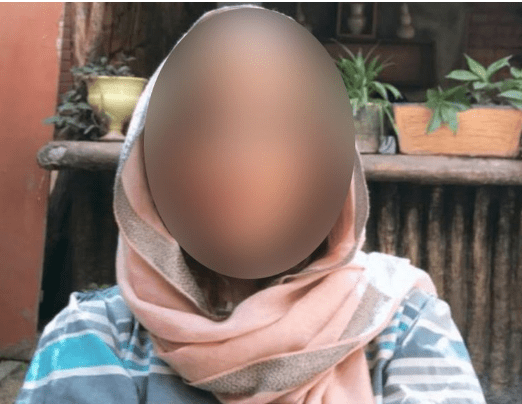
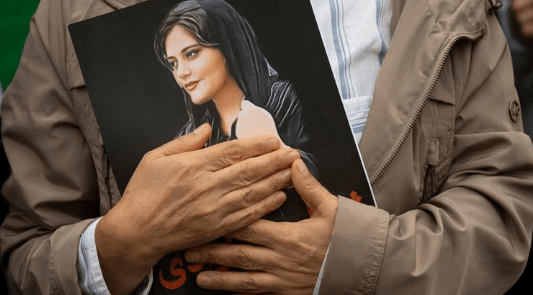
woman (left image) detained twice in Iran for taking part in the protests sweeping the nation (file photo, right)
Speaking to Sky News through voice notes sent via an encrypted messaging app, she talked about her experience and why she is prepared to risk her life to make a difference in Iran.
Image:Mina, not her real name, spoke to Sky News shortly after leaving solitary confinement after being detained taking part in the protests
Mina, a scholar in her early 30s was focused on her PhD studies in the Kurdish region of Iran, before the death of Mahsa Amini in mid-September.
Now, she says, the daily lives of Iranians and Iranian Kurds have changed due to the ongoing protests sparked by the death of a young woman.
Mina usually studies in the library and hangs out with her friends. Instead, a few days ago, she was arrested by the regime’s intelligence office and placed in solitary confinement.
“This is a place where detainees are not transferred into the justice system. They undergo beatings and torture,” she elaborated.
The torture sometimes is physical, psychological or a combination of the two. Mina is too afraid to delineate what happened to her in her voice messages.
Two of her friends were recently released from a juvenile detention center in Sanandaj, the capital of the Kurdish region.
Mina describes their experiences: “When women’s rights activists are detained, they [the police] don’t attack you physically.
“Instead [the police] threaten, intimidate and try to frighten them. They insult people’s beliefs. It is an intense psychological violence.
“That woman’s future is then also targeted. They can make the woman lose her job and make her life difficult. This creates crippling fear.”
Mina after being held in a cell, was transferred to a building she describes as a house. She was held there once again in solitary confinement until her recent release.
Mina believes the authorities have arrested so many people that they have run out of cells to hold them.
She knows of two other student protesters who were also held in a basement of a home.
“They were held for a week in a huge basement full of protesters. They told me that they were beaten by cables and iron sticks.
“The jails are full of prisoners so now they use houses and basements to detain protesters.”
Image:A man is kicked by Iranian plain clothes security forces, one of whom is holding a gun
According to Iranian human rights activist News Agency, 244 protesters were killed, including 32 children. “When we speak about fear for life, every person in this movement fears for their own lives and the lives of their fellow protesters,” she says, reflecting on the events of the current and past protests.
“We see guns firing in front of us. We have woken in the night shocked out of sleep at the sound of bullets, sirens and the smell of gunpowder and burning on the streets. We see how many people are being killed so the fear of losing one’s life still exists.”
Mina on protesters who survive: “Many of us are concerned about what is going to happen and about the heavy price we have paid inside the country because of the protests and strikes.
“We are also afraid of the hope we have pinned on change. Our fear and concern is that this hope will be lost or crushed.”
Tensions are rising in Iran’s Kurdish regions of which Mina and Amini call home. A recent investigation follows an intensification of Iranian security forces’ crackdown on Iranian Kurds.
Confirmed online video shows police on motorcycles riding through the streets, shooting at civilians. Plainclothes policemen hide among them in the crowds. A video released by the human rights group Amnesty International shows tear gas and bullet shells lying on the floor.
Video from Sanandaj shows security forces patrolling and firing at a residential area. Some of the men were heavily armed and nearly all had their faces covered as they appeared to be shooting at local shops and people’s homes.
Mina fears that police brutality may have weakened the morale of some protesters.
“I think these protests will continue but maybe not with the intensity of the first days and weeks, partly because the crackdown has intensified. But, I think some people will continue despite that.”
Iranian Kurds have been protesting since Amini’s death, with an image showing huge crowds at her funeral on 17 September.
Mina recalls the worry she and those around her felt for the 22-year-old, who died after being detained by police who claimed she wore her hijab (head covering) “improperly”.
“Yes, the current protest started with the death of Jina but this is about institutional violence against all the people and all the individuals living in this society,” she explained.
Image:Mahsa Amini, pictured here in this portrait, was 22-years-old when she died
Mina hopes and desires for a ‘’fundamental change”.
She acknowledges that change may or may not occur, but the fact that the protests continue in the presence of militaristic police shows that the seeds of anger that arose after Amini’s death are taking root and perpetuating in today’s Iranian society.
“I and many other people have concluded that maybe it is true that change will not happen right now but in the coming months or years, it will achieve the result people want. So hopefulness is greater than hopelessness. We will continue.”
Prescription folic acid may help reduce the risk of suicide attempts. (Photo: Unique images)
A recent study published in JAMA Psychiatry found that taking prescribed folic acid significantly reduced the risk of suicide attempts. Experts say it could potentially be a “major breakthrough” in suicide prevention.
A large study that looked at 867,000 American adults over a two-year period found a beneficial link between prescribed folic acid (a B-vitamin that helps the body grow healthy new cells) and a 44% reduction in suicide attempts and intentional self-mutilation. The study also showed a 5% reduction in suicide rates for each additional month of folic acid treatment.
Cleveland Clinic psychiatrist, Dr. Tatiana Falcone told the Unique Observer that the results were very interesting. She noted that while the researchers ruled out factors that could confound the results, they still found that folic acid regimens mattered.
The researchers also compared the two groups. One is taking prescribed folic acid and the other is taking cyanocobalamin (vitamin B12) as a control group. It was found that there were fewer suicide attempts in the folic acid group.
However, if additional research confirms that inexpensive and widely available folic acid is a suicide prevention tool, it would be “important for patients with low folic acid levels associated with depression or suicidal thoughts,” Falcone said.
Sanam Hafeez, a neuropsychologist and director of Comprehend Mind, who was not involved in the study, called the results “impressive”.
However, she agrees with Falcone that more research is needed. Hafeez also said it’s important to note that the folic acid used for the purposes of this study is a prescription drug and not an over-the-counter supplement.
“This will be a breakthrough not only in the treatment of depression, but also in the treatment of drug-resistant depression,” Hafeez added.
Several studies have found a link between low levels of folic acid (the natural form of the B vitamin) and depression. This may be because folic acid plays a role in the formation of serotonin, a neurotransmitter that helps regulate mood. Drugs such as selective serotonin reuptake inhibitors (SSRIs) help treat depression and other mood disorders by increasing levels of serotonin in the brain.
Falcone adds that it’s important not to wait for depression to be treated. “If depressive symptoms persist for a long time, prolonged suicidal thoughts increase the likelihood that the patient’s condition will continue to worsen. It’s best to combine medication and treatment.”she said.
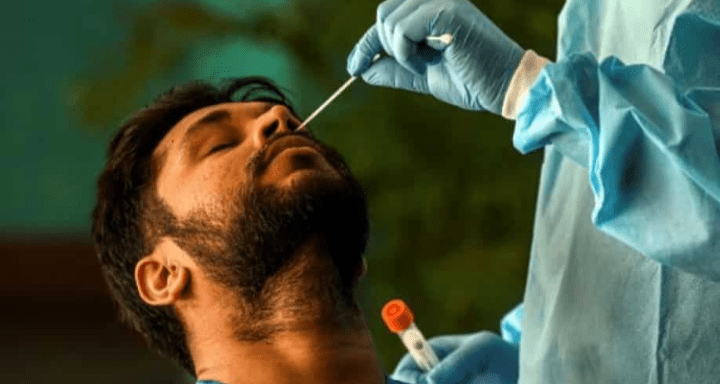
Neurological and psychiatric disorders are one of the worrisome consequences of COVID-19, according to a new study.
Oxford University researchers reported last year that one in three patients developed a mood disorder, stroke or dementia six months after contracting the coronavirus.
Now researchers have published a new long-term analysis of 1.25 million Covid patient datasets. Known as the largest of its kind, the study also included data on children and several new variants.
According to the University of Oxford and the National Institute for Health and Care Research, the risk of developing neurological and psychiatric disorders such as psychosis, dementia, brain fog and seizures remains high compared to other respiratory infections up to two years after infection. A report from the Oxford Medical Center for Biomedical Research, published Wednesday in the Lancet Psychiatry, says.
Anxiety and depression are more likely to occur immediately after a diagnosis of COVID-19 but tend to resolve within the first two months, as after a flu-like infection.
The research has shown that data on children show that children are less likely to be diagnosed with anxiety or depression by the age of two, and the risk of brain fog disappears.
However, the risk of developing seizures and psychotic disorders is significantly higher than in children who have had other respiratory infections.
Viewing how the different variants affected health risks, the probability of neuropsychiatric diagnoses increased, from 10% higher for anxiety to 38% for brain fog, if one was infected with the Delta variant as compared to the alpha version. Similar results were discovered for the Omicron variant, even though it is relatively milder.
Dr Max Taquet, who conducted the analysis at Oxford University, said:, “The findings shed new light on the longer-term mental and brain health consequences for people following COVID-19 infection. The results have implications for patients and health services and highlight the need for more research to understand why this happens after COVID-19, and what can be done to prevent these disorders from occurring, or treat them when they do.”
The study shows that adults under the age of 65 with a history of COVID-19 infection for up to two years suffer from brain fog (640 versus 550 cases per 10,000) and muscle disorders (44 versus 32). cases per 10,000 population). Over the same period, adults aged 65 years and older with COVID-19 were more likely to be diagnosed with brain fog (1540 vs 1230 per 10,000). Dementia (450 vs 330 per 10,000) and psychotic disorders (85 vs 60 per 10,000). Children with Covid were more likely to have seizures (260 versus 130 per 10,000 children) and psychotic disorders (18 versus 6 per 10,000 children).
Regarding study limitations, the researchers caution that these studies may be underrepresented in self-diagnosed and asymptomatic cases, as they are not usually included. It also does not address the severity or duration of illness after COVID-19.
There is a archaic belief that women live longer than men. But recent research seems to be challenging this ancient belief.
New study suggests that while men’s life expectancy is shorter, they are “more likely to live longer than women.” This analysis is based on a bicentennial survey of all continents.
The study, published in the BMJ Open Journal, looked at life expectancy data for men and women in 199 countries over nearly 200 years. He concluded that men live longer than women, especially those who are married or have advanced degrees.
“Males who are married or have a university degree tend to outlive females who are unmarried or do not have a high school diploma,” stated the authors.
The study also shows that in developed countries, women’s chances of surviving men in developed countries fell in 1970, but gradually increased in subsequent years for all populations. The increase or decrease in the difference in life expectancy is mainly due to differences in lifestyle and behavior, including smoking.










 Unique observer 24