Ghanaians Emigrating for Opportunities Abroad, Not Government Dissatisfaction – Gideon Boako

Dr. Gideon Boako, spokesperson for Vice President Dr. Mahamudu Bawumia, has dismissed assertions that disillusionment with the government is prompting Ghanaians to leave the country, labeling such allegations as misleading.

Speaking on Point Blank with Selorm Adonoo on Eyewitness News, Citi FM, Dr. Boako addressed perceptions that a notable number of Ghanaians are emigrating due to discontent with the current administration.

He argued that these claims lack foundation and misrepresent the true state of affairs in Ghana, undermining the government’s efforts.

Dr. Boako highlighted the positive aspects of the situation, pointing out an increase in cross-border trade as one of the reasons for Ghanaian migration.

The spokesperson emphasized the need for a balanced perspective on the issue, asserting that while Ghanaians seek opportunities abroad, it does not necessarily indicate widespread dissatisfaction with the government.

Otto Addo Aims High with Ghana’s “Young Squad”

Otto Addo

Otto Addo, who returned as Ghana’s national football team coach in March, has expressed optimism about the team’s prospects, emphasizing the potential of its young players. After leading Ghana to their first FIFA World Cup™ in eight years, despite a disappointing performance, Addo was appointed to replace Chris Hughton following a challenging AFCON and World Cup qualifying campaign.

In an interview with FIFA, Addo discussed his return to coaching, the team’s recent successes, and the exciting new talent emerging in Ghanaian football.

Reflecting on His Return: “It’s a good feeling! I knew most of the boys from the last World Cup, but it’s also good to see new Ghanaian talents coming up. It’s very interesting to work with them, so it’s been good seeing them,” said Otto Addo.

Challenges and Opportunities: Comparing the current squad to the one that competed in Qatar, Addo noted the youthfulness of the team and the potential for growth. “We have a lot of young guys that need to get experience. This squad can get there, but they’re not there yet, and I’m trying to help them to get there,” he explained.

Recent Performances: Ghana started their recent qualifiers with victories against Mali and the Central African Republic. “It’s always difficult at the national level because the boys come from all parts of the world, from different cultures with different philosophies and ideas,” Addo commented on their performance.

Looking Ahead: With upcoming qualifiers against Chad and Comoros in March 2025, Addo emphasized the importance of continuous improvement. “We have to develop because it’s going to be very tough again. I’m hoping that we can use the upcoming matches to connect and get even better,” he said.

Balancing Goals: “I told the players that we do have a big goal, but it’s very, very important for us to think about each match,” Addo emphasized the importance of focusing on immediate challenges while aiming for long-term success.

Favorite World Cup Memory: For Addo, his fondest World Cup memory dates back to 1986 when he witnessed Diego Maradona’s iconic performances. “To see Maradona play on TV, the way he played, and that one man can be so decisive was unbelievable,” he reminisced.

Otto Addo’s return has sparked optimism among Ghanaian football fans, who hope to see their team reach new heights under his guidanceSou

Source: FIFA.com

TotalEnergies CAF AFCON Morocco 2025 Qualifying Groups Announced

The draw for the TotalEnergies CAF Africa Cup of Nations (AFCON) Morocco 2025 qualifiers was held in Johannesburg on Thursday.

Forty-eight African countries will vie for a spot in the 35th edition of the biennial African showpiece, aiming to dethrone coach Emerse Faé’s Côte d’Ivoire as continental kings. Faé, alongside Moroccan legend Marouane Chamakh, assisted with the draw and saw his side placed in a challenging group as they bid to defend their title.

Côte d’Ivoire, the defending champions after their 2-1 victory over Nigeria in Abidjan earlier this year, were placed in Group G alongside former champions Zambia, Sierra Leone, and Chad

Hosts Morocco were placed in Group B, set to face Gabon, the Central African Republic, and Lesotho. With the assurance of participating as hosts, Morocco will approach this qualifying campaign with less pressure.

The qualifiers will commence in September 2024 and conclude in November 2024. The top two teams from each of the eleven groups, excluding the hosts’ group, will qualify for the competition.

The TotalEnergies CAF AFCON is Africa’s premier sporting event, and the next championship will be held from December 21, 2025, to January 18, 2026, in Morocco.

Groups:

Group A: Tunisia, Madagascar, Comoros, Gambia
Group B: Morocco, Gabon, Central African Republic, Lesotho
Group C: Egypt, Cape Verde, Mauritania, Botswana
Group D: Nigeria, Benin, Libya, Rwanda
Group E: Algeria, Equatorial Guinea, Togo, Liberia
Group F: Ghana, Angola, Sudan, Niger
Group G: Côte d’Ivoire, Zambia, Sierra Leone, Chad
Group H: DR Congo, Guinea, Tanzania, Ethiopia
Group I: Mali, Mozambique, Guinea Bissau, Eswatini
Group J: Cameroon, Namibia, Kenya, Zimbabwe
Group K: South Africa, Uganda, Congo, South Sudan
Group L: Senegal, Burkina Faso, Malawi, Burundi

Edinaman Celebrates as Lagoon Fishing Ban is Lifted

The Omanhen of the Edina Traditional Area, Nana Kodwo Conduah VI, alongside his chief priests, performed traditional rites at the Benya Lagoon to mark the lifting of the fishing ban. The ceremony included casting a fishing net three times, with the first catch presented to the Omanhen and then to the dignitaries in attendance.

The event attracted hundreds of people, including tourists and local residents. Dignitaries such as the Minister of Chieftaincy and Religious Affairs, Stephen Asamoah Boateng; Central Regional Minister, Justina Marigold Assan; Deputy Minister of Tourism, Arts and Culture, Mark Okraku Mantey; CEO of the Ghana Tourism Authority, Akwasi Agyeman; and Head of the Local Government Service, Dr. Nana Ato Arthur, were present

Women’s groups displayed canoes and wore colorful Tekua headgear, while a regatta added excitement to the occasion.

President Akufo-Addo in attendance, assured the public that the government would ensure a peaceful, free, fair, and transparent general election on December 7. He emphasized that elections should not incite violence and highlighted Ghana’s achievements in democratic governance, urging citizens to maintain peace.

The President also pledged to de-silt the Benya Lagoon and provide a bus for Edinaman SHS. Additionally, he presented drinks and GH¢50,000 to the Edina Traditional Council

Omanhen Nana Kodwo Conduah VI called for the establishment of a fund to support festival celebrations. He urged the Ministry of Chieftaincy and Religious Affairs and the Ministry of Tourism, Arts and Culture to collaborate in promoting festivals to maximize their economic potential. He also requested that a portion of the royalties from the Elmina Castle proceeds be allocated to the traditional council.

The Omanhen commended the government for constructing the Elmina Fishing Harbour, a long-desired facility in the area.

Senegal’s President Diomaye Faye Appoints Ousmane Sonko as Prime Minister

wp-17121457870258946077762240203987

Senegal’s top opposition leader Ousmane Sonko, right, and his key ally Bassirou Diomaye Faye address supporters in Dakar, Senegal, Friday March 15, 2024.  –  credit: © africanews

In a historic moment for Senegal, President Diomaye Faye, at 44 years old, assumed office on Tuesday, marking the inauguration of Africa’s youngest elected leader. Faye’s ascension to power represents a remarkable journey from incarceration to the presidential palace in a matter of weeks.

The recent election, which tested Senegal’s standing as a stable democracy in West Africa, saw Faye emerge victorious. His swift rise to prominence comes against a backdrop of political turmoil, with the region grappling with coups and attempted coups in recent years.

Faye’s political journey took a dramatic turn less than two weeks before the election when he and his mentor, the popular opposition figure Ousmane Sonko, were released from prison. Their freedom came as part of a political amnesty announced by outgoing President Macky Sall, following months of protests sparked by their arrests.

During the protests, which saw widespread participation and garnered international attention, rights groups reported dozens of casualties and the arrest of around 1,000 individuals. Concerns had been raised over Sall’s potential bid for a third term, despite existing term limits, fueling the unrest.

In his inaugural address, President Faye paid tribute to those who lost their lives or were detained during the protests, pledging to champion greater sovereignty for Senegal while prioritizing economic prosperity. He acknowledged the electorate’s desire for systemic change, signaling his commitment to addressing the grievances of Senegal’s youth, who have expressed frustration with the country’s trajectory.

Faye, a former tax inspector, assumed his first elected office as president, symbolizing a shift in leadership that resonates with the aspirations of Senegal’s youthful population. His rapid ascent underscores a broader sentiment across Africa, where a burgeoning youth demographic seeks to challenge entrenched political systems and foster inclusive governance.

Gabon Initiates National Dialogue for Democratic Reform

Gabon has embarked on a historic journey towards democratic renewal with the launch of a national dialogue, marking a significant departure from its political landscape dominated by the Bongo dynasty for over five decades. Led by President Felix Tshisekedi, this dialogue signals a pivotal moment in Gabonese politics, offering a beacon of hope for a brighter future.

The initiative, convened by Archbishop Jean Patrick IBa-Ba and attended by over four thousand citizens at the Libreville sports palace, signifies a collective endeavor to redefine Gabon’s trajectory. Among the attendees, a strong sense of unity and determination to advocate for change resonated profoundly.

At the heart of the dialogue lies the aspiration to foster a more just, fraternal, and prosperous Gabon, articulated by Archbishop IBa-Ba. Participants, including transitional senator Armelle Yembi Yembi and trade unionist Sylvain Mayabi Binet, emphasized the importance of equitable distribution of Gabon’s wealth and genuine socio-economic development.

Representing civil society, Nicaise Moulombi, a key figure in the dialogue, highlighted the imperative of transcending past challenges and cultivating a renewed sense of purpose. He expressed optimism about the prospects for positive transformation, citing recent indicators of progress and stressing the significance of vision and determination in shaping Gabon’s future.

The outcomes of the national dialogue are slated to inform legislative measures, laying the foundation for a new constitution to be subjected to a referendum. This democratic process will empower the Gabonese people to directly contribute to shaping the country’s governance framework, marking a significant step towards democratic consolidation.

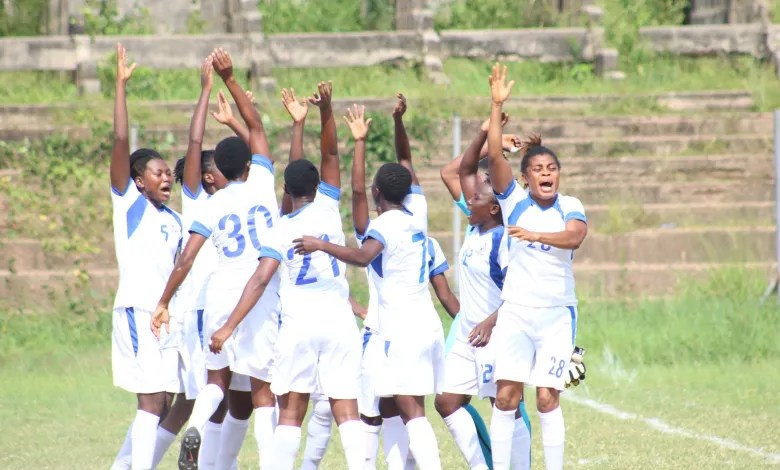
Police Ladies Advance in Women’s FA Cup After Victory Against Ampem Darkoa Ladies

Police Ladies continued their impressive journey in the Women’s FA Cup by defeating holders Ampem Darkoa Ladies 2-1 in a thrilling quarter-final match on Sunday, March 31st.

The match began with Juanita Aguadze giving Police Ladies an early lead, finding the net in the eighth minute. However, Ampem Darkoa Ladies responded with determination, equalizing through Latifa Abesik in the 52nd minute.

Despite the momentum shift, Police Ladies demonstrated resilience, reclaiming the lead with a goal from substitute Sophia Mabena Agyaakwa in the 57th minute. Ampem Darkoa Ladies were awarded a late penalty opportunity to level the score, but they failed to capitalize, securing Police Ladies’ well-deserved victory.

Police Ladies will now face Supreme Ladies in the semi-finals, who secured their spot after a penalty shootout victory against Nasara Ladies following a 1-1 draw in regular time.

In another compelling match at the Auntie Aku AstroTurf, Division One League side Epiphany Warriors emerged victorious against Jonina FC with a 2-1 win. Sonia Opoku opened the scoring for the Warriors in the 61st minute, followed by Leticia Adjei’s dramatic goal in the 112th minute of extra time. Jonina FC managed to pull one back through Eunice Kpentey’s penalty in the 85th minute, but it was not enough.

The Epiphany Warriors, the only Division One League team remaining in the tournament, now face the formidable challenge of Army Ladies in the next round of the Women’s FA Cup.

MP Sosu Criticizes President Akufo-Addo’s Decision to Veto Anti-Gay Bill


Title: MP Sosu Criticizes President Akufo-Addo’s Decision to Veto Anti-Gay Bill

Francis-Xavier Sosu, the Member of Parliament for Madina, has strongly condemned President Nana Addo Dankwa Akufo-Addo’s recent refusal to sign the anti-gay bill into law.

In a letter to Parliament, the Presidency requested a delay in submitting the anti-gay measure for ratification, citing legal complications. Alban Bagbin, the Speaker of Parliament, has sharply criticised the President’s move.

During a Face to Face interview with Umaru Sanda Amadu on Citi TV, Mr. Sosu criticised the President’s veto of the anti-LGBTQ+ measure, calling it “unacceptable.”

He emphasised ongoing legal challenges to the measure in the Supreme Court, emphasising the importance of clarity before moving forward. Mr Sosu went on to say, “When the bill has undergone thorough parliamentary processes and eventually passed into law, for the President to simply veto it, I don’t think it’s an acceptable practice.”

To resolve the standoff, he requested that the Supreme Court issue a definite interpretation of the measure.

Meanwhile, Richard Dela Sky, a private legal practitioner, and Dr. Amanda Odoi, a gender activist, have both filed lawsuits against the bill, adding to the legal complexities surrounding the sensitive topic.

Royal Rivalry: Former Goasohene and Incumbent Clash Over Chief Palmwine Tapper Position

Nana Kwasi Bodomprah, Goasomanhene

A heated dispute has erupted in Goaso, Ahafo Region, as the former Goasohene, Nana Agyei Ampofo, and the current Omanhene, Nana Kwasi Bosomprah, engage in a verbal battle over their qualifications to hold the esteemed position of chief palmwine tapper for Otumfuo Osei Tutu II.

Nana Agyei Ampofo, 77, a lawyer and former Member of the Council of State, abdicated the Goaso stool in 2000 amid a chieftaincy dispute. Nana Bosomprah, 58, a driver with the Ghana Cocoa Board, assumed the position eight years later in 2008.

The war of words began on January 12, 2024, when Nana Ampofo held a news conference to respond to alleged statements by Nana Bosomprah questioning his royal lineage and claiming he signed a letter renouncing his royal status before ascending the stool.

Nana Ampofo asserted, “I am telling Nana Bosomprah that I’m a royal of Goaso, secondly, I abdicated the stool on my own volition.” He refuted Nana Bosomprah’s assertion that his family alone holds royal status in Goaso.

Highlighting the lineage dispute, Nana Ampofo also mentioned an attempted assassination during the chieftaincy dispute and pointed fingers at individuals close to the current Omanhene. He criticized Nana Bosomprah for an alleged autocratic administration that limits the input of sub-chiefs.

In response, Nana Bosomprah, at a subsequent news conference, stood firm on his position that Nana Ampofo is not a royal. While denying explicitly stating that Nana Ampofo wrote a renunciation letter, he claimed copies of the letter exist in the town.

Asserting the tradition that the Goasohene is the chief palmwine tapper for Asantehene, Nana Bosomprah challenged Nana Ampofo to trace his lineage and prove eligibility for the position. He refuted allegations of planning an assassination and being autocratic, maintaining that his administration is inclusive.

The clash continues as the two leaders present conflicting narratives, leaving the community divided over the qualifications for the prestigious role of Otumfuo’s chief palmwine tapper.

Financial Struggles Keep Over 137,000 SHS 1 Students in Western North from Reporting to School

In the Western North Region, more than 137,000 Senior High School (SHS) 1 students are facing delays in commencing their academic journey due to financial constraints, as reported by the Conference of Heads of Assisted Secondary Schools (CHASS).

Despite the official reopening for fresh SHS students on December 4, 2023, just over half of the students placed in schools within the Western North Region have yet to attend classes. The primary obstacle is the financial hardship experienced by parents, with a significant number being cocoa farmers.

Nana Amo Amankwah, the President of CHASS in the Western North Region, expressed his concerns during an interview with Citi News. He emphasized that the situation is worrying, with some schools having only a little over 50% of the admitted students present.

Mr. Amankwah urged the students to prioritize reporting to school over concerns about meeting all the requirements outlined in the prospectus. He assured them that the government has made provisions for a smooth academic session, including the availability of mattresses in many schools.

In an effort to shed light on the financial burden faced by parents, a study conducted by Africa Education Watch, an educational civil society organization, revealed that the expenses incurred for prospectuses and other items surpassed the costs covered by the government under the Free Senior High School program.

According to the education think tank, parents spent GH¢2,477 on prospectuses for their wards in boarding schools. Additionally, an extra GH¢4,000 was expended on various personal items, including provisions (60%), transportation (10%), books (10%), upkeep (10%), and personal effects such as toiletries and sanitary pads (10%) during the 2023/2024 academic year.

The plea from education authorities is for students to prioritize their education and disregard concerns about fully meeting the prospectus requirements, as the government has taken steps to ensure a conducive learning environment.

Source: Citi news