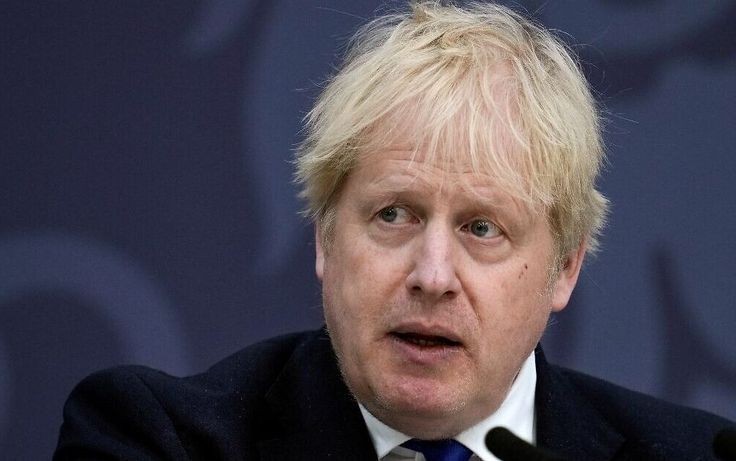
Scandal-ridden Boris Johnson announced on Thursday that he will step down as British prime minister after being abjured by his ministers and a majority of Conservative MPs.
Bending to the certainty as more than 50 ministers resigned and lawmakers said he had to leave, a quarantined and powerless Johnson spoke outside Downing Street to confirm he would resign.
The process of choosing that new leader should begin now.
And today I have appointed a cabinet to serve, as I will until a new leader is in place,” Johnson noted.
After days of jockeying for his job, the scandal-plagued Johnson has been dumped by all but a few of his allies after a recent spate of scandals shattered their will to back him.
“His resignation was inevitable,” said deputy chairman of the Conservative Party, Justin Tomlinson, said on Twitter. “As a party we must quickly unite and focus on what matters. These are serious times on many fronts.”
The Conservatives now have to elect a new leader, which could take weeks or months.
A quick YouGov poll shows that of the Conservative MPs who will replace Johnson, Defense Secretary Ben Wallace is the most preferred, followed by Commerce Secretary Penny Mordaunt and former Treasury Secretary Rishi Sunak.
Many say he should resign immediately and turn over to his agent Dominic Raab because he has lost the trust of the party.
Labor leader Keir Starmer, leader of the opposition Labor Party, said if the Conservatives did not oust Johnson soon,he would call a parliamentary confidence vote.
“If they don’t get rid of him, then Labour will step up in the national interest and bring a vote of no confidence because we can’t go on with this prime minister clinging on for months and months to come,” he said.
The crisis erupted as the UK faced its biggest financial burden in decades due to the COVID-19 pandemic, rising inflation and what is expected to be the most vulnerable of any major economy excluding Russia by 2023.
This was also followed by internal divisions, sparked by a bitter vote to leave the European Union in 2016 and threats from the UK itself calling for another referendum on Scottish independence, the second in a decade.
In one of the most turbulent 24 hours in recent British political history, support for Johnson has evaporated, epitomized by Finance Minister Nadhim Zahawi, who was only appointed on Tuesday, calling on his boss Resign.
On Wednesday night, Zahavi and other cabinet ministers traveled to Downing Street with senior representatives of lawmakers who were not in government to tell Johnson the game was over.
Johnson in the first place refused to go, appearing ready to dig a hole and fire Michael Gove, a member of his senior ministerial team who was one of the first to tell him he needed to resign – to reassert his authority.
An ally told the Sun newspaper that the party rebels would have to “do bloody hands” to ditch Johnson.
But as resignations poured in on Thursday morning, it became clear that his position was untenable.
“This is not sustainable and it will only get worse: for you, for the Conservative Party and most importantly of all the country,” Zahawi said on Twitter. “You must do the right thing and go now.”
Some of the retainers, including Defense Secretary Ben Wallace, said they did so only because they had an obligation to protect national security.
Too many ministers have resigned and the government faces paralysis. Despite his impending departure, Johnson began appointing ministers to fill vacant positions.
“We now have a responsibility to ensure that the people of this country have a functioning government,” Michael Ellis, minister in the Cabinet Office, which oversees the functioning of the government, told parliament.
The zestful Johnson came to power nearly three years ago and has vowed to push for Brexit and save Brexit from a heated debate since the 2016 referendum.
Since then, some of the Conservatives have zealously supported the former journalist and the mayor of London, while others have excitingly supported them, despite the objection that they usually attracted a section of the electorate against their party.
This became clear after the December 2019 elections, but his government’s militant and often chaotic governing style and a series of scandals have eroded the favor of many lawmakers, and polls show he is no longer popular with the general public.
The most recent crisis came after government minister Chris Pincher resigned after being accused of harassing men at a private club.
Johnson had to apologise after being told Pinch had been the subject of previous sexual misconduct complaints before appointing him. The prime minister said he had forgotten.
This comes after months of scandals and missteps, including a damning report about a boozing party at his Downing Street residence and office that breached COVID-19 lockdown rules and saw him sacked by the 56-year-old Police fined for birthday party.
There was also criticism for not being good enough to handle inflation, with many Britons struggling with policy change, an ill-fated MP defense for breaking lobbying rules, and soaring fuel and food prices.
“It should have happened long ago,” Labour’s Starmer said. “He was always unfit for office. He has been responsible for lies, scandal and fraud on an industrial scale.”
 Unique observer 24