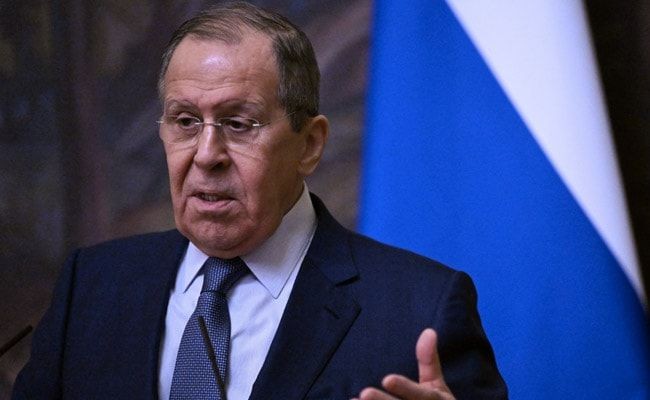
Russian Foreign Minister Sergei Lavrov dismissed claims that Moscow is causing a global food crisis.
He in a conversation with the Arab ambassador in Cairo said that Western countries were deforming the truth about the impact of sanctions on global food security.
He accused Western countries of trying to enforce their dominance on others.
Much of the Arab world and parts of Africa have been hit hard by the grain shortages caused by Russia’s war in Ukraine.
A groundbreaking agreement signed on Friday to resume grain exports from Ukraine after Russia attacked a target in the port of Odessa on Saturday brought the balance under control.
Lavrov said the West’s “aggression” to impose sanctions on Russia suggests a simple conclusion. “This is not about Ukraine, this is about the future of the world order.
“They say everybody must support a rules-based world order, and the rules are written depending on what specific situation the West wants to resolve in its own favour.”
Egypt had strong ties with Russia, which supplied grain, weapons and many tourists before the invasion of Ukraine.
After conversing with Shoukry, Lavrov said at a joint press conference that the West understands, but drags out the conflict “what and whose end it will be”.
For him, this is the first leg of a short trip through Africa, including Ethiopia, Uganda and Congo-Brazzaville.
Lavrov said in an article in a local newspaper before the trip that his country has always “sincerely supported Africans in their struggle for freedom from the colonial yoke”.
He added that Russia appreciated Africans’ “balanced position” on the issue of Ukraine.
He tacked that Western sanctions imposed on Russia exacerbated the “negative dynamics” in international food markets due to the coronavirus pandemic.
Grain is stuck in Ukraine.
Customarily, Ukraine and Russia supply more than 40% of Africa’s wheat, the African Development Bank says.
Egypt generally consumes a lot of Ukrainian grain. It imported 3.62 million tons in 2019, more than any other country.
However, Lavrov in his article dismissed allegations that Russia was “exporting hunger” and denounced Western propaganda.
Lavrov will visit three African countries to rally support at the height of the war.

 Unique observer 24