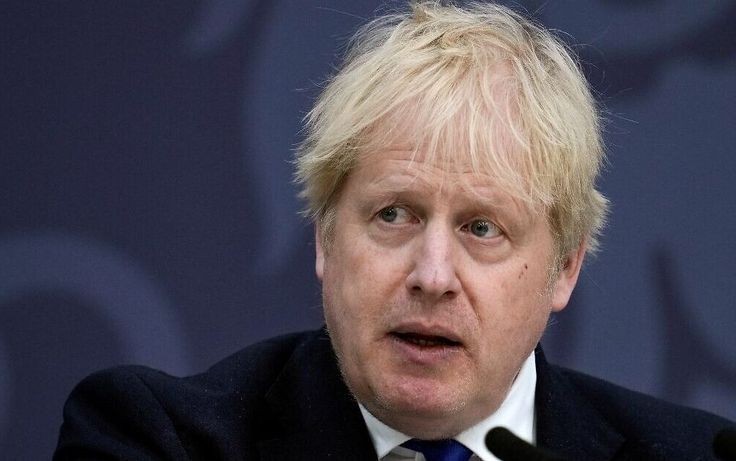
British Prime Minister Boris Johnson resigns over scandals.

British Prime Minister Boris Johnson

Scandal-ridden Boris Johnson announced on Thursday that he will step down as British prime minister after being abjured by his ministers and a majority of Conservative MPs.

Bending to the certainty as more than 50 ministers resigned and lawmakers said he had to leave, a quarantined and powerless Johnson spoke outside Downing Street to confirm he would resign.

The process of choosing that new leader should begin now.

And today I have appointed a cabinet to serve, as I will until a new leader is in place,” Johnson noted.

After days of jockeying for his job, the scandal-plagued Johnson has been dumped by all but a few of his allies after a recent spate of scandals shattered their will to back him.

“His resignation was inevitable,” said  deputy chairman of the Conservative Party, Justin Tomlinson, said on Twitter. “As a party we must quickly unite and focus on what matters. These are serious times on many fronts.”

The Conservatives now have to elect a new leader, which could take weeks or months.

A quick YouGov poll shows that of the Conservative MPs who will replace Johnson, Defense Secretary  Ben Wallace is the most preferred, followed by Commerce Secretary Penny Mordaunt and former Treasury Secretary Rishi Sunak.

Many say he should resign immediately and turn over to his agent Dominic Raab because he has lost the trust of the party.

Labor leader Keir Starmer, leader of the opposition Labor Party, said if the Conservatives did not oust Johnson soon,he would call a parliamentary confidence vote.

“If they don’t get rid of him, then Labour will step up in the national interest and bring a vote of no confidence because we can’t go on with this prime minister clinging on for months and months to come,” he said.

The crisis erupted as the UK faced its biggest financial burden in decades due to the COVID-19 pandemic, rising inflation and what is expected to be the most vulnerable of any major economy excluding Russia by 2023.

This was also followed by internal divisions, sparked by a bitter vote to leave the European Union in 2016 and threats from the UK itself calling for another referendum on Scottish independence, the second in a decade.

In one of the most turbulent 24 hours in recent British political history, support for Johnson has evaporated, epitomized by Finance Minister Nadhim Zahawi, who was only appointed on Tuesday, calling on his boss Resign.

On Wednesday night, Zahavi and other cabinet ministers traveled to Downing Street with senior representatives of lawmakers who were not in government to tell Johnson the game was over.

Johnson in the first place refused to go, appearing ready to dig a hole and fire Michael Gove, a member of his senior ministerial team who was one of the first to tell him he needed to resign – to reassert his authority.

An ally told the Sun newspaper that the party rebels would have to “do bloody hands” to ditch Johnson.

But as resignations poured in on Thursday morning, it became clear that his position was untenable.

“This is not sustainable and it will only get worse: for you, for the Conservative Party and most importantly of all the country,” Zahawi said on Twitter. “You must do the right thing and go now.”

Some of the retainers, including Defense Secretary Ben Wallace, said they did so only because they had an obligation to protect national security.

Too many ministers have resigned and the government faces paralysis. Despite his impending departure, Johnson began appointing ministers to fill vacant positions.

“We now have a responsibility to ensure that the people of this country have a functioning government,” Michael Ellis, minister in the Cabinet Office, which oversees the functioning of the government, told parliament.

The zestful Johnson came to power nearly three years ago and has vowed to push for Brexit and save Brexit from a heated debate since the 2016 referendum.

Since then, some of the Conservatives have zealously supported the former journalist and the mayor of London, while others have excitingly supported them, despite the objection that they usually attracted a section of the electorate against their party.

This became clear after the December 2019 elections, but his government’s militant and often chaotic governing style and a series of scandals have eroded the favor of many lawmakers, and polls show he is no longer popular with the general public.

The most recent crisis came after government minister Chris Pincher resigned after being accused of harassing men at a private club.

Johnson had to apologise after being told Pinch had been the subject of previous sexual misconduct complaints before appointing him. The prime minister said he had forgotten.

This comes after months of scandals and missteps, including a damning report about a boozing party at his Downing Street residence and office that breached COVID-19 lockdown rules and saw him sacked by the 56-year-old Police fined for birthday party.

There was also criticism for not being good enough to handle inflation, with many Britons struggling with policy change, an ill-fated MP defense for breaking lobbying rules, and soaring fuel and food prices.

“It should have happened long ago,” Labour’s Starmer said. “He was always unfit for office. He has been responsible for lies, scandal and fraud on an industrial scale.”

2022 AWCON: Zambian Barbra Banda precluded over ‘gender eligibility’ issues

Barbra Banda

Zambia captain Barbra Banda has been exempted from the Women’s Africa Cup of Nations after an unsuccessful gender eligibility tests.

  In spite of being allowed to compete in last year’s Olympics, the 22-year-old striker failed to meet the standards required by global governing body FIFA, whose gender rules are those of the African Football Confederation (Caf) on WAFCON.

“All the players had to undergo gender verification, a Caf requirement, and unfortunately she did not meet the criteria set by Caf,” Andrew Kamanga, the president of Zambia’s FA (Faz), told BBC Sport Africa.

“It’s unfortunate that we find ourselves going into the tournament without our best players.”

   Zambia started Group C with a 0-0 draw against second-placed Cameroon in the third inning on Sunday and ended on Wednesday against Togo, who made their weekend debut after meeting Tunisia.

Banda gained international fame when she became the first female athlete to score a consecutive Olympic hat-trick in Tokyo.

When asked by BBC Sport Africa on Sunday how Banda could possibly be at the Olympics instead of WAFCON, the cafe’s communications director Lux in September replied: “There is no such decision by the cafe medical board”.

The response has riled Kamanga however, who has told BBC Sport Africa that “whatever happened was purely a Caf requirement”.

Banda, who was left out of the team by Faz after failing tests before the final, is one of the highest scoring strikers in African women’s football, currently inactive but training in Morocco with the Copper Queens team.

“Everybody at home [in Zambia] has been made to believe that Faz did nothing and decided on their own to exclude the player,” Kamanga added.

“We the federations are compelled to undertake the tests and then we pass on the information to Caf, and Caf, equally, test the players if needs be in the tournament.

“So it will be unfair to turn around and say Caf is not part and parcel of whatever has transpired.”

BBC Sports Africa groks that three other Zambian players were affected by their gender qualifications but chose not to play for the national team with 22 players instead of the allowed 26.

 She was first included in the WAFCON Zambia team after taking medication to lower testosterone levels . Of course, testosterone levels were too high, but still not up to par,  BBC Sport Africa perceives.

The striker has signed with Chinese club Shanghai Shengli but is said to have a chance of promotion to Spain’s top flight.

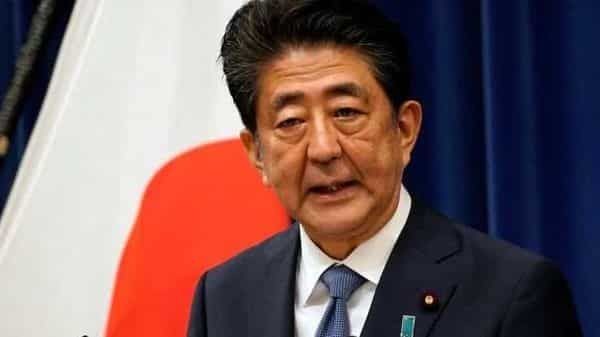
Explosive device uncovered at Shinzo Abe’s shooting suspect’s dwelling – reports

Japan’s former prime minister Shinzo Abe

Former Japanese Prime Minister Shinzo Abe perishes in a hospital after being shot at a political campaign event.

Prime Minister Abe was shot twice while speaking in the southern city of Nara on Friday morning.

Local security officials took action against the shooter, the 41-year-old suspect is now in police custody.

According to local media, an explosive device was found during a search of the suspect’s apartment.

Before the announcement of Abe’s death, Prime Minister Fumio Kishida condemned the attack, saying ”It is barbaric and malicious and it cannot be tolerated.”

“This attack is an act of brutality that happened during the elections – the very foundation of our democracy – and is absolutely unforgivable,” Mr Kishida noted.

At a press conference held at the Nara Medical University Hospital, doctors said that Prime Minister Abe had received two gunshot wounds to the neck at a distance of about 5 cm (1 inch) and damage to the heart.

Prime Minister Shinzo Abe recovered minutes after the attack, but the 67-year-old’s condition worsened.

Doctors said there were no vital signs when the former prime minister was taken in for treatment and was given a blood transfusion at the hospital.

Witnesses reported that the man shot Abe twice in the back with what he described as a large pistol. The former prime minister fell to the ground as onlookers screamed in shock and incredulity.

The suspect turned out to be Yamagami Tetsuya from Nara. According to local media reports, it is known that he was a member of the Japan Maritime Self-Defense Force (JMSDF), which is equivalent to the Japanese Navy. He is known to have retired from active duty in 2005.

There hasn’t any comment from officials on the suspect’s motives, but local media reported that Yamagami told police that “I didn’t like former Prime Minister Abe and I wanted to kill him.” He also said he told officials that he “has no hatred for the former prime minister’s political beliefs.”

Police also found several potentially explosive devices during a search of his home, and NHK said bomb disposal technicians were preparing a controlled explosion at the scene.

Prime Minister Abe resigned due to illness from 2012 to 2020 after completing a one-year term in 2006.

He later revealed that he had ulcerative colitis, a relapsing bowel disease, and during his tenure pursued a more active defense and foreign policy and had long sought to amend Japan’s post-war peace constitution.

He also promoted an economic policy known as “Abenomics” based on monetary easing, fiscal stimulus, and structural reforms.

He was succeeded by his close party friend Suga Yoshihide.