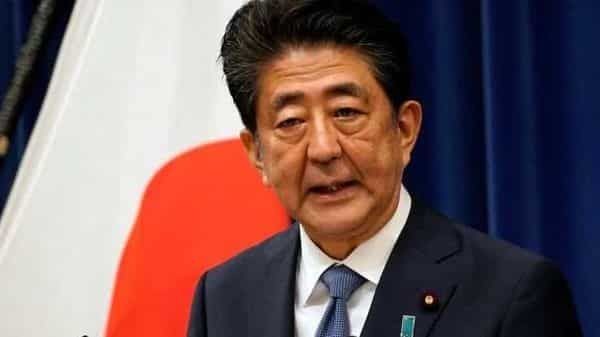
Former Japanese Prime Minister Shinzo Abe perishes in a hospital after being shot at a political campaign event.
Prime Minister Abe was shot twice while speaking in the southern city of Nara on Friday morning.
Local security officials took action against the shooter, the 41-year-old suspect is now in police custody.
According to local media, an explosive device was found during a search of the suspect’s apartment.
Before the announcement of Abe’s death, Prime Minister Fumio Kishida condemned the attack, saying ”It is barbaric and malicious and it cannot be tolerated.”
“This attack is an act of brutality that happened during the elections – the very foundation of our democracy – and is absolutely unforgivable,” Mr Kishida noted.
At a press conference held at the Nara Medical University Hospital, doctors said that Prime Minister Abe had received two gunshot wounds to the neck at a distance of about 5 cm (1 inch) and damage to the heart.
Prime Minister Shinzo Abe recovered minutes after the attack, but the 67-year-old’s condition worsened.
Doctors said there were no vital signs when the former prime minister was taken in for treatment and was given a blood transfusion at the hospital.
Witnesses reported that the man shot Abe twice in the back with what he described as a large pistol. The former prime minister fell to the ground as onlookers screamed in shock and incredulity.
The suspect turned out to be Yamagami Tetsuya from Nara. According to local media reports, it is known that he was a member of the Japan Maritime Self-Defense Force (JMSDF), which is equivalent to the Japanese Navy. He is known to have retired from active duty in 2005.
There hasn’t any comment from officials on the suspect’s motives, but local media reported that Yamagami told police that “I didn’t like former Prime Minister Abe and I wanted to kill him.” He also said he told officials that he “has no hatred for the former prime minister’s political beliefs.”
Police also found several potentially explosive devices during a search of his home, and NHK said bomb disposal technicians were preparing a controlled explosion at the scene.
Prime Minister Abe resigned due to illness from 2012 to 2020 after completing a one-year term in 2006.
He later revealed that he had ulcerative colitis, a relapsing bowel disease, and during his tenure pursued a more active defense and foreign policy and had long sought to amend Japan’s post-war peace constitution.
He also promoted an economic policy known as “Abenomics” based on monetary easing, fiscal stimulus, and structural reforms.
He was succeeded by his close party friend Suga Yoshihide.
 Unique observer 24